Understanding Bee SVG, DXF, EPS, JPG, and PNG Files
When it comes to digital design and graphic creation, file formats play a crucial role in determining the usability, quality, and versatility of your work. Among the most common formats are Bee SVG, DXF, EPS, JPG, and PNG. Each format serves a unique purpose and caters to different needs, making them essential tools for designers, creators, and professionals alike.
The Role of File Formats in Digital Design
Digital files come in various formats, each with its own set of characteristics and applications. Whether you're working on a logo, a product illustration, or a technical drawing, selecting the right format can significantly impact the final outcome. For instance, Bee SVG is an XML-based vector format that allows for scalability without loss of quality, making it ideal for web use and responsive design.
DXF (Drawing Exchange Format) is widely used in engineering and architectural fields due to its precision and compatibility with CAD software. EPS (Encapsulated PostScript) is another vector format known for its high-quality output and support for both vector and bitmap graphics, often used in print media.
On the other hand, JPG and PNG are raster formats that are commonly used for photographs and images. While JPG is best suited for photographs due to its compression capabilities, PNG offers lossless compression and supports transparency, making it a preferred choice for logos and icons.
Why Bee SVG and Other Formats Matter
The inclusion of Bee SVG in a digital product bundle highlights the growing importance of scalable vector graphics in modern design workflows. Unlike raster formats, which can lose quality when scaled, Bee SVG maintains clarity at any size, ensuring consistent visual quality across platforms and devices.
Additionally, the presence of multiple formats such as DXF, EPS, JPG, and PNG in a single ZIP folder provides users with flexibility. This variety ensures that the content can be used in different contexts, from web development to print production, depending on the specific requirements of the project.
Practical Applications of Bee SVG and Related Formats
Whether you're a designer, a business owner, or a creative professional, understanding the practical applications of these formats can help you make informed decisions. Here are some real-world scenarios where these formats are particularly useful:
- Logo Design: Bee SVG is excellent for creating logos that need to be used across various platforms, from websites to printed materials.
- Product Illustration: EPS and DXF are popular choices for product illustrations that require precision and scalability.
- Web Development: Bee SVG and PNG are ideal for web graphics, especially when maintaining transparency and responsiveness is key.
- Print Media: EPS and JPG are commonly used in print projects due to their compatibility with printing equipment and high resolution.
- Technical Drawings: DXF is widely used in engineering and architecture for its accuracy and ability to maintain detailed specifications.
By offering a comprehensive collection of Bee SVG, DXF, EPS, JPG, and PNG files, this digital product empowers users to meet diverse design needs with a single purchase. It eliminates the need to search for multiple formats separately, saving time and effort in the creative process.
Evaluating Suitability for Different Projects
Before choosing a format, it's important to consider the specific requirements of your project. For example, if you're designing a website, Bee SVG and PNG are likely the best options due to their scalability and compatibility with web standards. However, if you're preparing a document for print, EPS or JPG might be more appropriate.
Another consideration is the intended use of the file. If the graphic will be used in a mobile app, Bee SVG is ideal because it scales perfectly on different screen sizes. Conversely, if the image is meant for a high-resolution print, JPG or EPS would be better suited for maintaining clarity and detail.
Additionally, the availability of editing tools plays a role in format selection. Some formats, like DXF, may require specialized software for editing, while others, like Bee SVG, can be easily manipulated using standard design tools.
Benefits and Limitations of Each Format
Each format has its own set of advantages and limitations. Understanding these can help you choose the most suitable option for your project:
- Bee SVG: Benefits include scalability, small file size, and support for interactivity. Limitations involve potential compatibility issues with older browsers and limited support for complex effects.
- DXF: Benefits include precision, compatibility with CAD software, and support for layered data. Limitations involve difficulty in editing without specialized tools and larger file sizes.
- EPS: Benefits include high-quality output, support for both vector and bitmap graphics, and cross-platform compatibility. Limitations include less widespread use compared to other formats and potential issues with embedded fonts.
- JPG: Benefits include efficient compression and wide compatibility. Limitations involve loss of quality with repeated compression and lack of support for transparency.
- PNG: Benefits include lossless compression, support for transparency, and high-quality output. Limitations involve larger file sizes and less optimal performance for photographs.
By weighing these factors, you can determine which format best suits your specific needs and project goals.
Conclusion: Making Informed Choices with Bee SVG and More
In conclusion, Bee SVG, DXF, EPS, JPG, and PNG are all valuable formats that serve different purposes in the world of digital design. Choosing the right one depends on your project's requirements, target audience, and intended use.
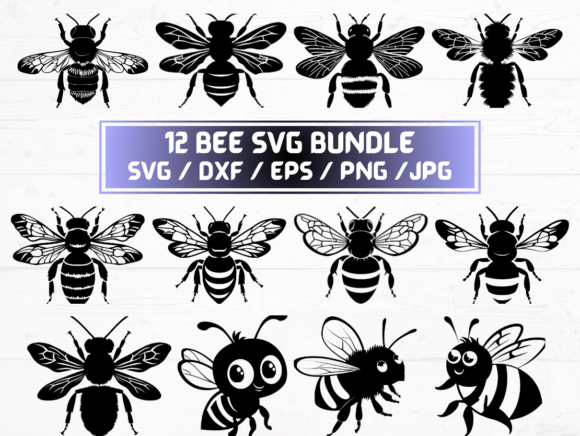
This digital product, which includes 12 Bee SVG files, 12 PNG files, 12 DXF files, 12 JPG files, and 12 EPS files, offers a versatile solution for creators who need access to multiple formats in one convenient package. With 300 dpi resolution and transparent backgrounds, these files are ready for use in a wide range of applications, from web design to print media.
Whether you're a designer, a business owner, or a creative professional, having access to a variety of high-quality files can streamline your workflow and enhance the quality of your work. By understanding the strengths and limitations of each format, you can make informed decisions that align with your project goals and deliver exceptional results.